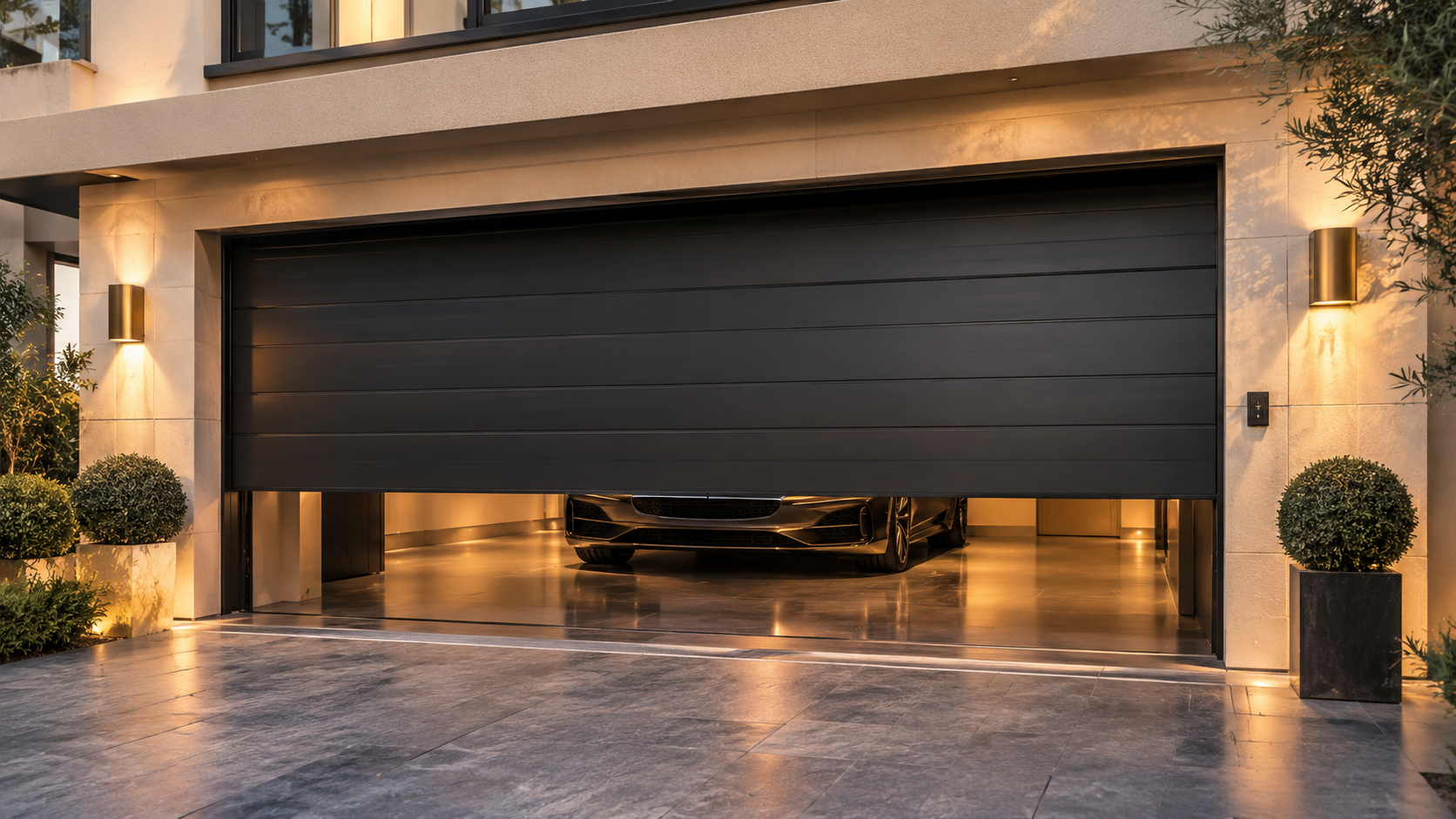
Picking a new garage door seems simple enough until you actually start researching it. Suddenly you're comparing steel gauges, R-values, and track systems you've never even heard of. If you're looking for the best residential garage doors for your home, here's the good news: the decision usually comes down to a handful of clear factors. How does the door operate? What's it made of? How well does it insulate your garage? And does it actually match your house's style? This guide walks through each of those so you can make a choice you won't second-guess five years from now.
An overhead garage door isn't just a functional barrier anymore. It's one of the largest visible surfaces on your home's exterior, and honestly, it works harder than almost any other moving part of your house, opening and closing dozens of times a week in all kinds of weather. When choosing an overhead garage door, that combination of visibility and daily wear is exactly why it's worth getting the selection right the first time.
📌 Key Takeaways
- 1.Sectional doors are the most common style because each panel can hold insulation.
- 2.Steel balances cost, strength and upkeep. Wood, aluminum and fiberglass suit specific needs.
- 3.Look for an R-value of at least 3, and higher if the garage is attached or used as a workspace.
- 4.Multi-point locks, reinforced panels and rolling code openers add real security.
- 5.Hire a professional installer, since torsion springs store a lot of tension.
- 6.A replacement garage door is one of the few upgrades with a strong resale return.
Overhead Garage Door Types for Residential Homes
Most residential properties stick to one of four basic door styles. Each one has a different mechanism, and that mechanism affects everything from ceiling clearance to how much insulation the door can actually hold.
Sectional Garage Doors
Sectional doors are built from several horizontal panels connected by hinges. As the door opens, it rolls up and back along a track and sits flush against the garage ceiling instead of swinging outward. This is the most common overhead garage door style in North America, and there's a reason for that. Since the panels separate into sections, manufacturers can pack insulation into each one, which makes sectional doors a solid pick for garages that double as workshops or storage space. The tradeoff? They need enough overhead clearance for the horizontal track, so garages with low ceilings or ceiling-mounted storage racks might need some modifications before installation.
Roller Doors
Roller doors use a single curtain of slats that coils into a drum mounted above the opening. They take up very little ceiling space compared to sectional doors, which makes them a practical choice for garages with limited headroom or for homes where the ceiling is already crowded with shelving or lighting. Roller doors are usually simpler mechanically, meaning fewer moving parts to maintain, though they tend to offer less insulation capacity than a sectional design and come in fewer style options.
Tilt-Up Doors
A tilt-up door is a single rigid panel that pivots on a track, swinging up and back as one solid piece. These were more common a generation ago, and you'll still find plenty on older homes. They're mechanically straightforward and often cost less upfront, but a single-panel door needs more clearance in front of the garage during operation. Repairs can get trickier too, since the whole door usually has to come down for service rather than just one panel.
Carriage House and Swing-Out Styles
Carriage house doors mimic the look of old barn or stable doors, either swinging outward on hinges or running on an overhead track while keeping that classic appearance. People choose these almost entirely for curb appeal, often on homes with a traditional, farmhouse, or craftsman look. The good news is they can be built with the same insulated cores as sectional doors, so you're not sacrificing performance just to get the look.
Material Options and What They Mean for Durability
Steel is the most common material for residential garage doors because it balances cost, strength, and low maintenance fairly well. Most steel doors come coated and painted, which protects against rust, though coastal or high-humidity climates will still want a higher-quality finish. Wood doors bring a warmth and texture steel just can't replicate, but they demand more upkeep, including periodic refinishing to keep warping or moisture damage at bay. Aluminum is lighter than steel and resists corrosion well, which is why it's often chosen for larger doors where weight matters, though it dents more easily. Fiberglass and composite doors split the difference: wood-like appearance, less maintenance, somewhat higher price tag.
Whatever material you land on, residential garage doors can last 15 to 20 years, depending on material, climate, use, and maintenance, according to Menards' garage door buying guide. That's a pretty wide range, and where your door falls within it usually comes down to how exposed it is to weather and how well it's kept up.
Insulation and R-Value: Why It Matters
If your garage is attached to your house, shares a wall with living space, or doubles as a workshop, insulation isn't optional. It's a comfort and energy issue, plain and simple. The R-value measures how well a material resists heat transfer, and higher numbers mean better insulation. For most homes in moderate to temperate climates, it's worth looking for a garage door with an R-value of at least 3, as recommended in the Lowe's garage door buying guide. Homes in harsher climates, or garages used as living or working space, often do better with doors rated well above that minimum.
Insulated doors typically use polystyrene or polyurethane cores sandwiched between steel layers. Polyurethane gets injected and expands to fill the whole panel, generally giving a higher R-value and a quieter, sturdier door overall. Polystyrene panels are simpler and cheaper, but a bit less efficient.
Security Features to Look For
A garage door is often the largest entry point into a home, so security deserves real attention here. Multi-point locking systems, reinforced panels, and tamper-resistant tracks all add meaningful protection. Many modern openers also include rolling code technology, which changes the access code every time the door is used. That makes it much harder for anyone to intercept and reuse a signal. If you're updating other entry points around the house anyway, it's worth thinking about your whole entry strategy at once instead of treating the garage door like an isolated decision.
Style and Curb Appeal
Because a garage door can cover a third or more of a home's front facade, its style has an outsized effect on curb appeal. Flat panel doors suit modern and minimalist homes, raised panel doors fit traditional architecture, and carriage house styles pair well with farmhouse or craftsman designs. Window inserts, decorative hardware, and color choice let you fine-tune things further. Some homeowners coordinate exterior updates across the board, pairing a new garage door with new siding, trim, or even interior window treatments. For indoor spaces, understanding the convenience of motorized blinds can also help homeowners create a more comfortable and functional environment, with easier control over natural light and privacy. Pairing these modern window treatments with an updated garage door and a cohesive exterior palette can noticeably lift a home's overall look.
Standard Sizes and Cost Ranges
Single-car garage doors typically run around 8 to 9 feet wide, while double-car doors usually come in at 16 feet wide, with height commonly set at 7 or 8 feet. Custom sizes are available for oversized vehicles or odd openings. Cost varies quite a bit based on material, insulation, and style, with basic steel doors sitting at the lower end and insulated wood or custom carriage house doors at the higher end. Installation adds to the base price too, and depends on whether the opener, tracks, or framing need replacing as well.
Installation and Maintenance Expectations
Professional installation is strongly recommended for residential garage doors, since torsion springs store a lot of tension and can cause injury if handled wrong. Once it's installed, maintenance stays fairly light: lubricate rollers and hinges a couple of times a year, check the weatherstripping for gaps, and test the auto-reverse safety feature now and then. These small details are usually what separates a door that lasts the full 15 to 20 years from one that needs early replacement.
Return on Investment: Does a New Garage Door Pay Off?
Garage doors are one of the few home improvements where the financial case is unusually strong, which surprises a lot of homeowners. A replacement garage door can return 268% at resale nationally, according to C.H.I. Overhead Doors, citing Zonda's Cost vs. Value report. That figure reflects how much buyers notice and value a well-maintained, attractive garage door compared to one that's outdated or damaged. Few exterior upgrades offer that kind of payback, so it's one of the smarter places to put your money if you're planning to sell in the next several years.
Complementary Home Upgrades Worth Considering
Garage doors rarely get updated on their own. A lot of homeowners use the project as a jumping-off point for a broader exterior and interior refresh. On the interior side, smart automation has caught on well beyond the garage The Convenience of Motorized Blinds has made window treatments part of that same smart home conversation, letting homeowners control light and privacy with an app or a voice command, not unlike how a smart garage opener lets you check and close your door remotely from a phone. If you're already putting money into connected home technology for your garage, extending that convenience to other parts of the house is a pretty natural next step.
How to Choose the Best Residential Garage Door for Your Home
Start by measuring your available ceiling and side clearance, since that alone will rule out some styles right away. Then figure out how much insulation you actually need based on your climate and how the garage gets used day to day. From there, narrow down material and style based on budget and the architectural character of your home. Finally, factor in long-term maintenance, since a slightly higher upfront cost on a low-maintenance material can save you money and hassle over the door's lifespan.
Conclusion
Choosing the best residential garage door involves more than simply finding a design that looks good. You also need to consider durability, insulation, security, operating mechanisms, and long-term maintenance. By comparing different styles and materials, you can find a garage door that suits your home's architecture and everyday requirements.
Once your garage door is sorted, don't overlook the rest of your home's appearance and comfort. The right window treatments can complement your interior design while helping manage natural light, privacy, and heat. If you're looking to upgrade your windows, Dubai Blind offers a range of customized window treatments, including blinds, curtains, and motorized options. Whether you're refreshing a single room or updating your entire home, explore their blinds and curtains Dubai collection to find window solutions that match your style and requirements.
Frequently Asked Questions
What is the most popular type of residential garage door?
Sectional doors are one of the most widely installed styles in residential homes because they balance insulation, security, and style options. Their panel-based design also allows them to open vertically without requiring additional driveway clearance.
How long should a garage door last?
A residential garage door can typically last around 15 to 30 years, depending on its material, construction quality, frequency of use, and maintenance. Regular inspections, lubrication, and timely repairs can help extend its lifespan.
Which material is best for residential garage doors?
Steel, aluminum, wood, and fiberglass are common materials used for residential garage doors. Steel is known for its strength and durability, aluminum is lightweight and resistant to rust, while wood offers a traditional appearance. The best choice depends on your budget, preferred design, climate, and maintenance expectations.
Are insulated garage doors worth it?
Insulated garage doors can help regulate temperatures inside the garage, reduce outside noise, and improve energy efficiency. They are particularly useful when the garage is connected to the house or used as a workspace. The level of insulation you need depends on your local climate and how frequently you use the space.
What is the difference between sectional and roller garage doors?
Sectional garage doors consist of multiple horizontal panels that move upward along tracks and sit beneath the ceiling when open. Roller garage doors use narrow horizontal slats that roll into a compact enclosure above the opening. Sectional doors offer various insulation and design options, while roller doors can be useful where overhead space is limited.
How often should a residential garage door be maintained?
A residential garage door should be inspected regularly, with a more thorough maintenance check at least once a year. This includes checking the springs, hinges, rollers, tracks, cables, and opening mechanism. Regular maintenance helps identify wear and potential problems before they lead to expensive repairs.
Are automatic garage doors better than manual garage doors?
Automatic garage doors offer convenience because they can be operated using a remote control or wall-mounted switch. Manual garage doors are generally simpler and may have lower initial costs, but they require physical effort to operate. The right option depends on your budget, daily usage, and preference for convenience.