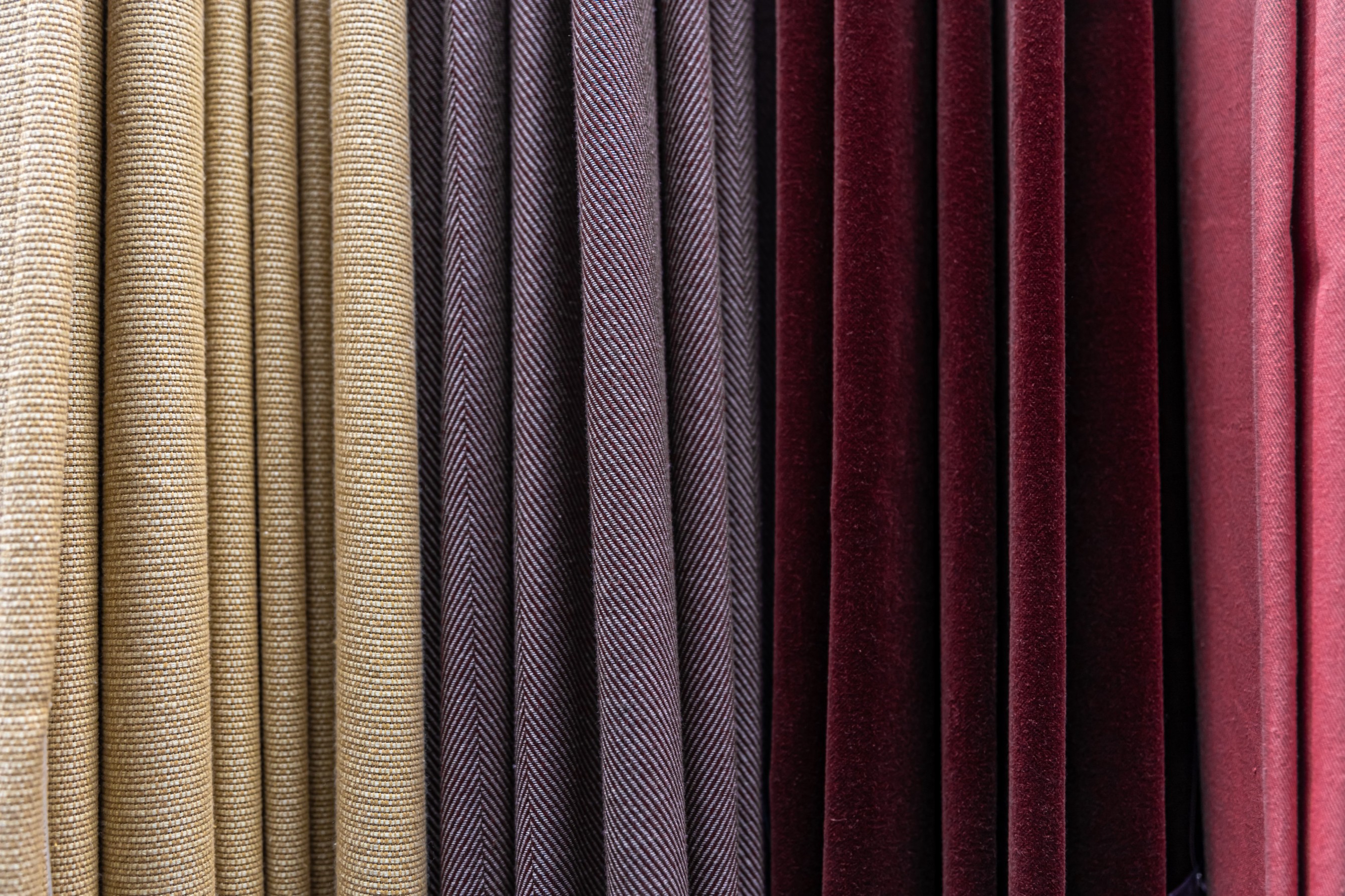
Choosing the right curtain fabrics is especially important in the UAE, where intense sunlight, high temperatures, and dust can affect both comfort and the lifespan of your window treatments.
Living in the UAE means dealing with intense sunshine, high temperatures, and dust storms throughout most of the year. Your home needs protection from these elements, and choosing the right curtain fabrics makes all the difference in keeping your space comfortable and energy-efficient.
📌 Key Takeaways
Choose curtain materials that can withstand intense UAE sunlight and high temperatures. Thermal fabrics can help reduce heat entering rooms and support better cooling efficiency. Blackout materials are ideal for bedrooms and spaces requiring strong light control. Smooth, tightly woven synthetic fabrics can be easier to maintain in dusty conditions. UV-resistant and solution-dyed materials offer better protection against fading. Select different fabric weights and light-control levels according to each room's needs. Investing in durable, climate-suitable materials can reduce frequent curtain replacement.
The fabric you pick affects how cool your rooms stay, how much sunlight enters, and even your electricity bills. Let's examine what truly matters when selecting curtains for homes in the UAE.
Understanding the UAE Climate Challenge
The UAE experiences extreme heat from May through September, with temperatures often crossing 45째C. The sun beats down relentlessly, turning rooms into ovens if you don't have proper window protection. Even during cooler months, the sun remains strong and bright.
Dust is another constant issue here. Sandstorms happen regularly, leaving fine particles on every surface. Your curtains face these particles daily, which means fabric choice affects how often you need to clean and how long your curtains last.
Heat-Blocking Fabrics Work Best
When selecting curtain fabrics for hot climates, look for materials with thermal properties, reflective coatings, or tightly woven construction that can help limit heat entering your rooms.
Thermal curtain fabrics help keep your home cool by blocking heat before it enters. These materials have special coatings or weaves that reflect sunlight instead of absorbing it. The difference in room temperature can reach 5-7 degrees compared to regular curtains.
Polyester blends work extremely well in hot climates. They resist fading from constant sun exposure and handle high temperatures without losing shape. Many homeowners across the Emirates choose polyester for its durability and low maintenance needs.
Light Control Matters for Comfort
Blackout curtain materials have become increasingly popular in UAE homes. They block nearly 100% of sunlight, which helps reduce cooling costs significantly. Bedrooms stay dark even during bright afternoons, helping people who work night shifts or have young children.
Light-filtering fabrics provide a middle ground. They soften harsh sunlight without making rooms completely dark. This works well for living rooms where you want natural light without the glare and heat that comes with it.
Dust Resistance Keeps Things Clean
Living in the UAE means accepting that dust will settle on everything. Some curtain materials repel dust better than others. Synthetic fabrics like polyester naturally resist dust accumulation compared to natural fibres that tend to trap particles.
Smooth, tightly-woven fabrics collect less dust than textured materials. This simple feature saves you countless hours of cleaning and maintains better air quality in your home. Regular vacuuming becomes easier when dust doesn't cling stubbornly to fabric surfaces.
Durability Under Constant Sun Exposure
UV-resistant curtain fabrics include protective treatments that help them withstand prolonged sun exposure while reducing fading and fibre damage.
UV rays damage fabrics over time, causing colours to fade and fibres to weaken. UV-resistant curtain fabrics include protective treatments that extend their lifespan significantly. Standard curtains might last 2-3 years in UAE conditions, while UV-treated fabrics easily last 5-7 years.
Solution-dyed fabrics resist fading better than piece-dyed alternatives. The colour goes through the entire fibre rather than sitting on the surface, which means even years of sun exposure won't turn them pale or washed out.
Making the Right Choice
Ultimately, the best curtain fabrics depend on the room, level of sunlight, privacy requirements, maintenance preferences, and budget.
Consider your specific needs before selecting fabric. Bedrooms benefit most from heavy blackout materials. Living areas might need lighter fabrics that balance privacy with natural light. Each room serves different purposes and deserves appropriate curtain solutions.
Budget plays a role, but remember that quality window treatment fabrics prove more economical long-term. Dubai Blind can help homeowners explore curtain styles and materials suited to different rooms and light-control requirements. Cheap curtains fade quickly under the UAE sun and need replacement within months. Investing in proper materials saves money and frustration over the years.
FAQs
What curtain fabrics are best for the UAE climate?
Thermal, blackout, polyester-blend, tightly woven, and UV-resistant fabrics are practical choices for UAE homes. The ideal material depends on the room's sunlight exposure, privacy needs, and maintenance requirements.
Which curtain fabrics help block heat?
Thermal curtains and fabrics with reflective coatings or tightly woven construction can help reduce the amount of heat entering through windows. These options are particularly useful for rooms exposed to strong direct sunlight.
Are blackout curtains suitable for UAE homes?
Yes. Blackout curtains are useful for bedrooms, nurseries, and other spaces where strong light control is needed. They can block most incoming sunlight and help create a darker, more comfortable indoor environment.
Which curtain materials are easiest to maintain in dusty areas?
Smooth, tightly woven synthetic materials such as polyester are generally easier to clean and less likely to hold onto dust than heavily textured fabrics. Regular vacuuming or gentle cleaning can help keep them fresh.
How does sunlight affect curtain fabrics?
Prolonged exposure to UV rays can cause colours to fade and fibres to weaken over time. UV-resistant and solution-dyed materials can provide better resistance to fading in areas exposed to strong sunlight.
Are polyester curtains good for the UAE climate?
Polyester and polyester-blend curtains can be a practical choice because they are generally durable, resistant to fading, and relatively easy to maintain. They can also be available in different weights and light-control options.
Should every room have the same type of curtain fabric?
Not necessarily. Bedrooms may benefit from heavier blackout materials, while living rooms may work better with light-filtering fabrics that provide privacy while allowing natural daylight into the space.
How can I choose durable curtains for my UAE home?
Consider UV resistance, heat tolerance, dust resistance, cleaning requirements, fabric construction, and the amount of sunlight the room receives. Choosing a material suited to the UAE climate can help extend the life of your curtains.