📌 Key Takeaways
Outdoor shade installation makes the difference between a patio you use year-round and one that sits empty for half the summer. This guide covers the main structure types, a practical shade sail installation guide, realistic patio shade installation cost ranges, and when a DIY outdoor shade structure makes sense versus when it doesn't. There's a maintenance section too, since Dubai's climate wears down shade fabric faster than most guides account for.
Why Invest in Outdoor Shade Installation?
Comfort is the obvious reason, but it's not the whole story. A decent shade structure can drop the surface temperature in that spot by 10 to 15 degrees compared to full sun. That's just physics, not marketing. Furniture, flooring, and even the paint on nearby walls last a lot longer once they're not baking every afternoon.
There's a cooling-cost angle too, and people tend to overlook it. Shade positioned near windows or exterior walls takes some of the heat load off your air conditioning, since the wall isn't absorbing as much direct sun. It's a modest effect on its own, but it adds up across a full summer.
A few practical benefits worth keeping in mind:
- Lower surface temperature on tiles, decking, and furniture
- Reduced UV fading on cushions, fabric, and exterior paint
- Slightly lower cooling load on nearby rooms
- More usable outdoor space across more months of the year
Honestly, the real difference is how much more a shaded patio gets used. An unshaded seating area sits empty from roughly April through September in most homes. A properly shaded one stays functional nearly year-round.
Types of Outdoor Shade Structures
Different backyard shade solutions suit different spaces, so it helps to know what you're choosing between.
Shade sails are tensioned fabric panels anchored at three or four points. A few things to know before choosing one:
- Cheapest structure to install and quick to put up
- Give a modern, minimal look
- Don't handle heavy rain well since water can pool if not angled correctly
- Need tension checks and occasional removal during strong wind
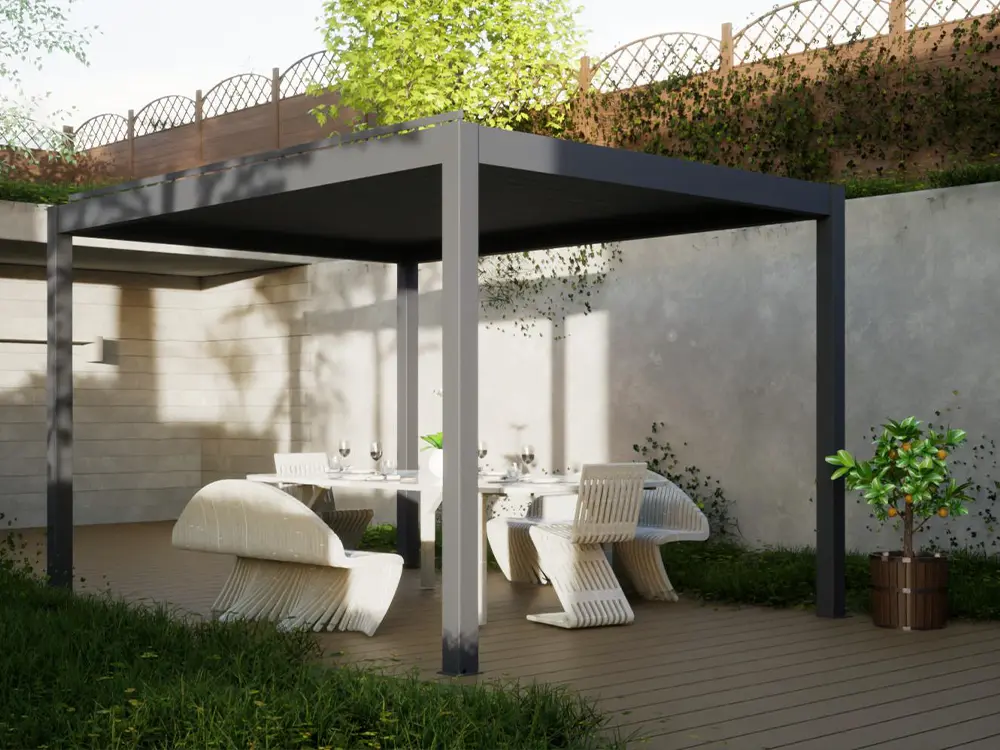
Pergolas are permanent framed structures, sometimes with fixed slats, sometimes louvered so you can control how much sun gets through. A pergola vs shade sail decision usually comes down to two things: budget and how long you want the structure to last. Pergolas cost more upfront but can last for decades with proper maintenance. An aluminum pergola in Dubai is a durable, long-term shading solution, while shade sails are more affordable and easier to replace when the fabric wears out.
Retractable awnings mount to a wall and extend outward on a frame, either manually or with a motor. They suit balconies or spots where shade is only needed part of the day. One of the more important awning installation tips is checking what the wall can actually support before drilling. A fully extended awning under wind load pulls harder on those mounting points than most people expect.
Umbrellas and cantilever shades are the simplest option, good for smaller patios or pool areas where a permanent structure doesn't make sense. They're inexpensive, but they offer the least coverage and stability once wind picks up.
Matching the Structure to Your Space
A small balcony usually does better with an awning or a compact umbrella than a full sail setup. A larger garden or pool deck can handle a pergola, or several sails working together. It also depends on how the space gets used:
- A dining area needs shade that's reliably there every day
- A lounge corner can often get away with something more flexible, like a retractable awning extended only when needed
- A pool deck usually benefits from a fixed structure that doesn't need adjusting
Shade Sail Installation Guide: Step-by-Step
If a sail is the direction you're leaning, here's a practical shade sail installation guide covering how it actually goes.
Start by measuring the area and marking where the anchor points will sit, whether that's existing posts, a wall, or new posts you're installing. The sail should end up angled slightly rather than dead flat, so water runs off instead of pooling in the middle during a rare Dubai downpour.
Install the anchor points next. A few things to check at this stage:
- Posts generally need concrete footings 60 to 90 centimeters deep, depending on sail size and soil conditions
- Wall anchors need solid masonry, not just plaster
- Fixings must be rated for the expected load
Attach turnbuckles to each corner before connecting the sail. These let you tension the fabric evenly once it's up. Pull it taut corner by corner and check the tension is even across the whole panel. A loose sail flaps constantly in wind and wears out much faster than one properly tensioned.
Finally, go back over every fitting and confirm it's tight and rated for both the sail's size and local wind conditions. This step gets skipped more often than it should, and occasional strong gusts here have a way of finding under-rated hardware.
Tools and Materials Needed
A DIY outdoor shade structure using a shade sail doesn't require much specialised equipment. The basics include:
- A drill with masonry bits
- A tape measure and spirit level
- A socket wrench
- Stainless steel turnbuckles, D-shackles, and eye bolts rated for outdoor use
Standard hardware corrodes quickly in this humidity, so stainless steel is worth the extra cost. For posts, budget for concrete mix, post anchors, and either timber or galvanized steel depending on the look you want. Wall mounting means masonry anchors rated for the actual load, not the cheapest option on the shelf.
Patio Shade Installation Cost Breakdown
Patio shade installation cost varies quite a bit depending on what's being built.
- A single small shade sail sits at the lower end of the price range
- Bigger, multi-sail setups or custom shapes cost more due to extra anchor points and labor
- Pergolas are the priciest overall, with motorized louvered versions pushing costs higher still
- Retractable awnings land somewhere in the middle, with motorized units costing more than manual ones
A few extra costs are easy to forget: permit fees where they apply, structural reinforcement if walls or roofs need it, and custom fabric colors or shapes for sails. Getting two or three quotes before deciding is worth the time, since prices for similar work can vary more between installers than expected.
DIY vs Professional Installation
A basic shade sail on a small patio is a realistic DIY outdoor shade structure project if you're reasonably comfortable with a drill. Umbrellas and freestanding shades are even simpler and barely count as installation at all.
Pergolas and motorized awnings are a different job entirely. A few reasons professional help usually makes sense here:
- Real structural load calculations are involved
- Motorized systems often need electrical work
- Local permit requirements frequently apply
- Poor installation can lead to stability problems during sandstorms or strong gusts
If there's any doubt about load calculations, wall anchoring, or local rules, bringing in a professional makes sense. The labor cost is small compared to what it costs if a structure fails during a storm.
Maintenance Tips for Long-Lasting Shade
Shade structures here face intense UV and occasional dust storms, so upkeep matters more than it would in a milder climate.
- Wash fabric sails and awnings every few months with mild soap and water to prevent dust buildup from degrading the fabric
- Check sail tension regularly, since fabric stretches slightly after installation
- Inspect metal hardware for corrosion, especially near the coast
- Check pergola joints and fixings yearly, and repaint or reseal wooden components before sun damage sets in
- Retract awnings during heavy wind or sandstorms rather than leaving them extended
Sustained wind pressure on an open awning puts real strain on the motor and frame over time, so this last point is worth taking seriously.
Conclusion
Outdoor shade installation isn't just about making a patio more comfortable, though it does that too. It protects furniture, eases the load on cooling bills, and turns a space you'd otherwise avoid for half the year into one you actually use. Whether a simple shade sail or a full pergola makes more sense depends on budget and how permanent the setup needs to be. If you're still weighing it up, a team like Dubai Blind can look at your space and talk through what actually suits your property before you commit to anything.
FAQs
How much does outdoor shade installation typically cost?
It depends a lot on the structure. Shade sails are the most affordable way in, while motorized pergolas and awnings sit at the top of the price range due to materials and installation work.
Can I install a shade sail myself without professional help?
Yes, for smaller sails on existing posts or walls. Larger sails, multiple anchor points, or any doubt about wall load capacity are better left to a professional.
What is the best material for outdoor shade structures?
UV-stabilized polyethylene or PVC-coated fabric works well for sails. Aluminum is generally the better choice for pergolas in Dubai, since it copes well with heat, humidity, and corrosion.
How long do shade sails and awnings last?
A decent shade sail usually lasts 10 to 15 years with proper care. Awnings, motorized ones included, tend to run a similar lifespan if maintained and protected during heavy wind.
Do I need a permit to install a pergola or shade structure?
In many parts of Dubai, permanent structures like pergolas need approval from the local municipality or community authority. Shade sails and freestanding umbrellas usually don't, but it's worth confirming local rules before starting.
What's the difference between a shade sail and an awning?
A shade sail is a fixed fabric panel stretched between anchor points, so coverage stays constant. An awning attaches to a wall and can extend or retract as needed, giving more flexibility but usually covering less area. Dubai Blind can help you weigh which one actually fits your space.