📌 Key Takeaways
This guide explains what awnings are, their different types, materials, benefits, sizing, and costs. It compares awnings with pergolas, umbrellas, and shade sails to help readers choose the right outdoor shade solution. It also covers installation considerations, maintenance, and key factors to consider before purchasing an awning for better comfort, durability, and protection from sunlight.
By July, the back deck gets brutal around 3 p.m. The chairs burn your legs. The sliding door throws so much glare that you can't see the TV. Most people just live with it for a few summers.Then someone mentions an awning, and it clicks. This guide explains what one is, how the main types differ, and what to check before you buy.
What Is an Awning?
An awning is a cover made of fabric or metal that mounts to the outside wall of a building. It slopes outward to block the sun and a bit of rain. You've walked under dozens of them. Think of the striped ones over a corner cafe, or the plain metal ones above a front door. An awning handles shade outside, and for light control indoors, it helps to know whether inside vs outside mount blinds suit your windows better.
Some stay put year-round. Others roll back against the wall.The slope is the part people overlook. Without it, rainwater pools on the cover and stretches the fabric. A decent pitch lets water run off.
What Are the Different Types of Awnings?
Types of awnings differ mostly in how they move and how much they cover. Your space and habits should drive the choice, not the brochure.
Fixed Awnings
A fixed awning never moves. The frame is usually aluminum or steel, and the cover is fabric or metal. They're simple and cheap, and there's almost nothing to repair. The catch is that they also block winter sun. Some homeowners hate that.
Retractable Awnings
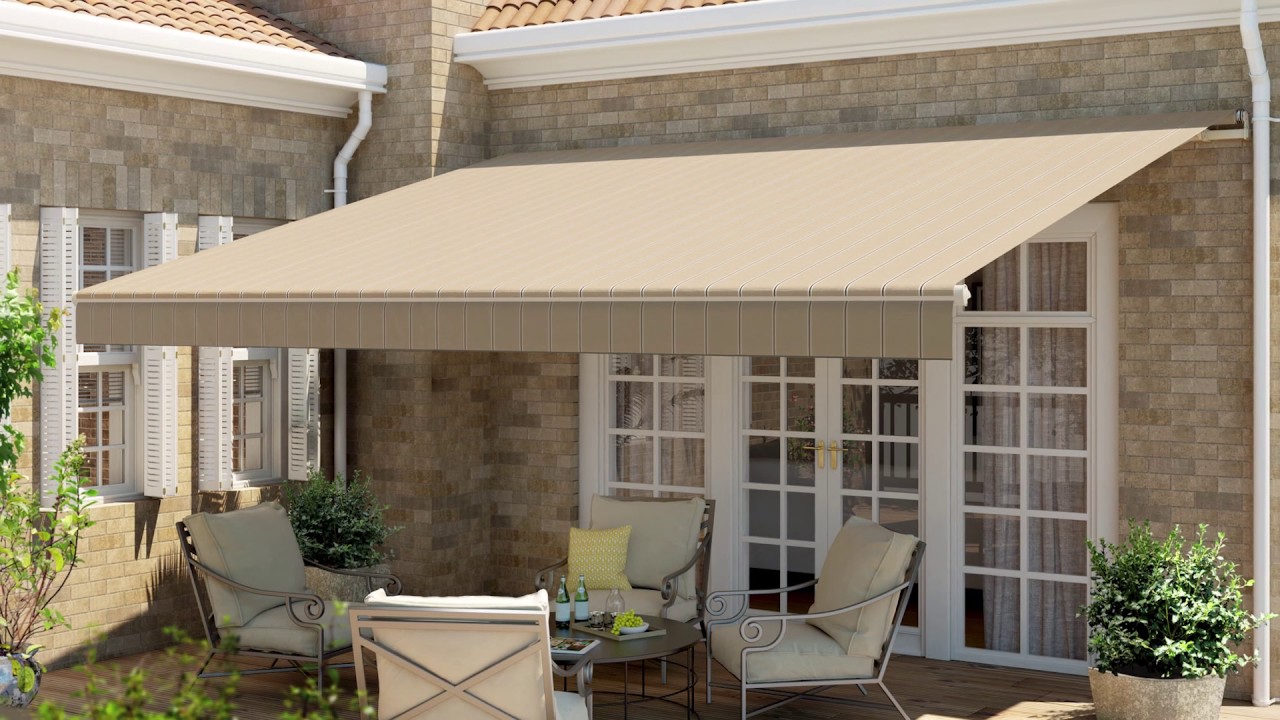
Retractable awnings fold in and out, usually on arms attached to a roller tube. You open one when it's hot. You close it when a storm is coming. That control is the main selling point. The fabric also spends less time exposed to wind and rain, which may help extend its lifespan.
For a patio awning, this is the type most people end up choosing. It shades the seating area in summer without making the house dark in January.
Motorised Awnings
A motorised awning runs on an electric motor. You use a wall switch, a remote, or sometimes a phone app. After a wee, you'll wonder why you ever cranked one by hand. Some come with wind sensors. If a gust hits while you're out, the awning pulls itself in. That feature alone saves a lot of torn fabric.
Smaller and Freestanding Options
Freestanding awnings stand on their own posts. They work around pools and in backyards, or anywhere the wall can't hold a mount. Window and door awnings, by contrast, cover a single opening. They cut glare and keep one room cooler. They also dress up a bare wall for not much money.
Awning Materials
Awning materials affect looks, lifespan, and how much cleaning you'll do. Think about weather before you think about color.
Fabric Choices
Acrylic is the usual favorite for homes. It resists fading and lets some hot air escape. Polyester costs less and often has a water-resistant coating. Vinyl-coated fabric sheds water completely and wipes clean. It doesn't breathe as well, so the space underneath can feel stuffy.
Metal Choices
Aluminum is light and doesn't rust, which makes it a solid pick for fixed awnings. Steel is stronger but heavier. It needs a good protective coating or it will rust. Metal awnings can offer durability in harsh weather, but their performance depends on the material, frame design, and installation.
What Are the Benefits of Installing an Awning?
The awning benefits show up quickly, often within the first summer. Some are obvious. Others you notice later. The obvious one is shade. A covered patio is usable at noon, and a light drizzle won't always send everyone inside.
Then there's indoor comfort. Stopping sunlight before it reaches the glass keeps rooms from heating up as much. Your air conditioner may not have to work as hard.Furthermore, UV rays slowly fade floors, curtains, and cushions. You won't see it day to day. After a few years, though, the damage is clear. Shade slows it down.Lastly, an awning changes how the house looks. A good color choice can make a flat wall feel finished.
Awning Size: Getting the Measurements Right
Awning size causes more buyer's regret than almost anything else. Too small, and the shade ends before the table does. Too big, and it dominates the wall or catches wind. Start with width. Measure the area you want covered. Next, decide on projection, which is how far the awning sticks out from the wall. Mounting height matters too. A higher mount gives you more headroom and a better slope for drainage.
Here's a tip that costs nothing. Sit in the space at different times of day and watch where the shadows land. Your morning shade may not match your afternoon needs. For example, four chairs around a dining table need more projection than two lounge chairs. People forget that chairs get pulled out. One more thing. Check with your city or homeowners association first. Some limit awning size or require approval.
Awning Cost: What Affects the Price
Awning cost depends on a long list of variables. Anyone who quotes you a flat number without seeing your home is guessing.
What Pushes the Price Up
- Retractable or motorised design
- Larger width and projection
- Higher quality fabric or frame
- Sensors, remotes, and lighting
- Difficult walls or tall mounting spots
How to Compare Quotes
Get at least two or three. Then look past the bottom line. One quote may include installation and a warranty, while another leaves both out. Ask to see a fabric sample in daylight. Colors look different outside than they do in a showroom. Also keep the long view in mind. A cheap awning that fades in three years costs more than a good one that lasts ten.
Awning vs Other Outdoor Shade Options
An awning isn't the only way to get shade. Each alternative has trade-off.
Awning vs Pergola
A pergola is an open frame of posts and beams. It looks great and feels permanent. However, on its own it gives little protection from sun or rain.Awnings cost less and go up faster. They can also retract. Pergolas make more sense if you're redesigning the whole yard.
Awning vs Umbrella
Umbrellas are cheap and easy to move. They also cover a small area, and a strong gust can send them tumbling. An awning offers wider, steadier shade.
Awning vs Shade Sail
Shade sails are light and affordable. They need strong anchor points, and many don't handle rain well. Awnings are sturdier and easier to live with.
When Should You Consider Professional Awning Installation?
Awning installation looks easy until you're on a ladder holding a heavy frame. The mount has to hit solid framing, not just siding. A poorly anchored awning can pull loose in wind.
When to Hire Someone?
Large units and motorised models usually call for a pro. So do brick, stucco, and concrete walls. Anything needing electrical wiring belongs in that group too.If you're unsure about load or drainage pitch, hire someone. A trained installer checks the wall, levels the frame, and sets the angle. They also test the motor before leaving.
When DIY Can Work
A small fixed awning over a window is a reasonable weekend project for a confident DIYer. Follow the manufacturer's instructions closely. Use the hardware that comes with the kit.
Choosing the Right Awning for Your Space
Choosing an awning isn't complicated once you break it down. Decide how you want to use the space. Match the material to your weather, and size it to cover everyone, chairs included.Take your time with quotes. Get the installation right. After that, the deck that felt like a skillet becomes the spot where everyone wants to sit.
Frequently Asked Questions
Are retractable awnings better than fixed awnings?
It depends on how you plan to use them. Retractable awnings offer flexibility and often last longer because you can close them in bad weather. Fixed awnings cost less and need less upkeep. If you want control through every season, retractable is usually the better fit.
What is the best material for an awning?
There's no single winner. Acrylic fabric is a strong all-around choice for homes because it resists fading. Aluminum works well if you want a rigid cover that needs little care. Let your climate make the final call.
How do I choose the right awning size?
Measure the width of the space first. Then decide how far the awning should project. Make sure it covers your seating area, including room for chairs. Check the sun's angle and any local size limits too.
What is the difference between an awning and a pergola?
An awning is a wall-mounted cover, often retractable, that mainly blocks sun and light rain. A pergola is an open frame of posts and beams. Pergolas look more permanent but offer less coverage unless you add a roof.
Why choose Dubai Blind for awning installation?
Dubai Blind works with shading products, so installation is part of its regular work. A dedicated provider can help with measurements, materials, and mounting in one place. Ask about warranties, site visits, and aftercare before you commit.